
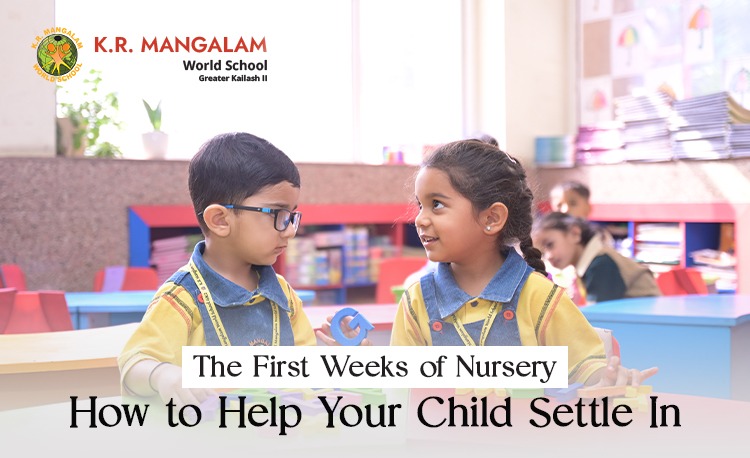
Nobody warns you that the first goodbye at the nursery gate can be harder on you than on your child.
Some children walk in without a backward glance. Others cling, cry, or go very quiet. Many do something in between, and change their minds from one day to the next. All of this is normal. For a three-year-old, nursery is often the first time they spend hours away from family, in a new place, with adults they have only just met.
The good news is that settling in follows a fairly predictable path, and parents can do a lot to make it smoother. We have organised this guide as a timeline, from the week before school to the end of the first month. It is also a useful lens if you are still comparing nursery schools in South Delhi, because the way a school handles these first weeks says a great deal about it.
The Week Before School Starts
Talk About It, But Not Too Much
Mention nursery in a cheerful, matter-of-fact way. Tell your child they will play, paint, and hear stories. Too much build-up can make some children more anxious, so keep it light.
Practise Short Separations
Leave your child with a grandparent or another trusted adult for an hour or two. Each time you return as promised, your child learns that goodbyes end in reunions.
Shift the Routine
Move bedtime, waking time, and meals closer to the school timetable. A well-rested child copes far better with something new.
Practise a Few Everyday Skills
Opening a lunch box, drinking from a bottle, washing hands, and saying “I need the toilet” are small things, but they help a child feel capable in a new place.
The First Morning
Keep the goodbye short and warm. A hug, a clear “I will pick you up after lunch,” and a smile is enough. Then leave, even if there are tears.
Resist the urge to slip away while your child is distracted. It may seem kinder in the moment, but children who discover a parent has vanished often become more anxious the following day. A clear goodbye, repeated in the same way each morning, builds trust.
And try to stay calm yourself. Children read their parents’ faces closely. If you feel emotional, that is completely understandable; save the tears for the car.
The First Two Weeks
Expect ups and downs. A child who walked in happily on day one may cry on day six, once they realise school is part of every day. This is a common pattern and usually passes.
Be on time for pick-up. Arriving when you said you would is one of the simplest ways to show your child that they can rely on you. At home, ask specific questions, such as “What did you paint?” or “Who did you sit next to?”, rather than “How was school?”
How We Help Children Settle at K.R. Mangalam World School, G.K-II
Our early years curriculum is built around play, inquiry, and exploration, and children are free to choose activities that interest them. For a nervous newcomer, being able to head straight for the blocks or the paints can make the room feel friendlier. Our learning spaces are planned with children’s social and emotional needs in mind, not only their academic ones.
Knowing the campus is secure helps many parents settle, too. Entry is through facial recognition for students and staff; visitors need a prior appointment and a government-issued ID, and the premises are under continuous surveillance. You can read more on our Infrastructure page.
Frequently Asked Questions (FAQs)
Q. How long does settling in usually take?
It differs from child to child. Some are comfortable within days, while others take a few weeks. Regular attendance helps, because routine is what makes school feel familiar.
Q. Should I stay in the classroom on the first day?
Follow the school’s settling-in arrangements. Ask about them in advance, so you can prepare your child for what will happen.
Q. Can my child bring a favourite toy?
Some schools allow a small comfort item in the first few days. Check with the teacher first.
Q. Will missing a few days make it harder?
It can. Long gaps early on can make each return feel like a fresh start. Where possible, keep attendance steady during the first month.
Looking Ahead
By the end of the first month, most children have a favourite activity, a friend or two, and a teacher they trust. The tears at the gate rarely last as long as parents fear, especially when home and school work together.
That partnership is worth looking for early. If you would like to hear how we at K.R. Mangalam World School, GK-II, regarded as one of the leading nursery schools in South Delhi, do it, we would be glad to talk. Write to us at info@krmangalamgk2.com or book a campus visit to meet our Pre-Primary team.